
The Invisible Queen
Sound Cinema™ —Finding real people—and the real story—when all else fails. Plus sports journalist John Canzano about the summer Olympic Games in London.

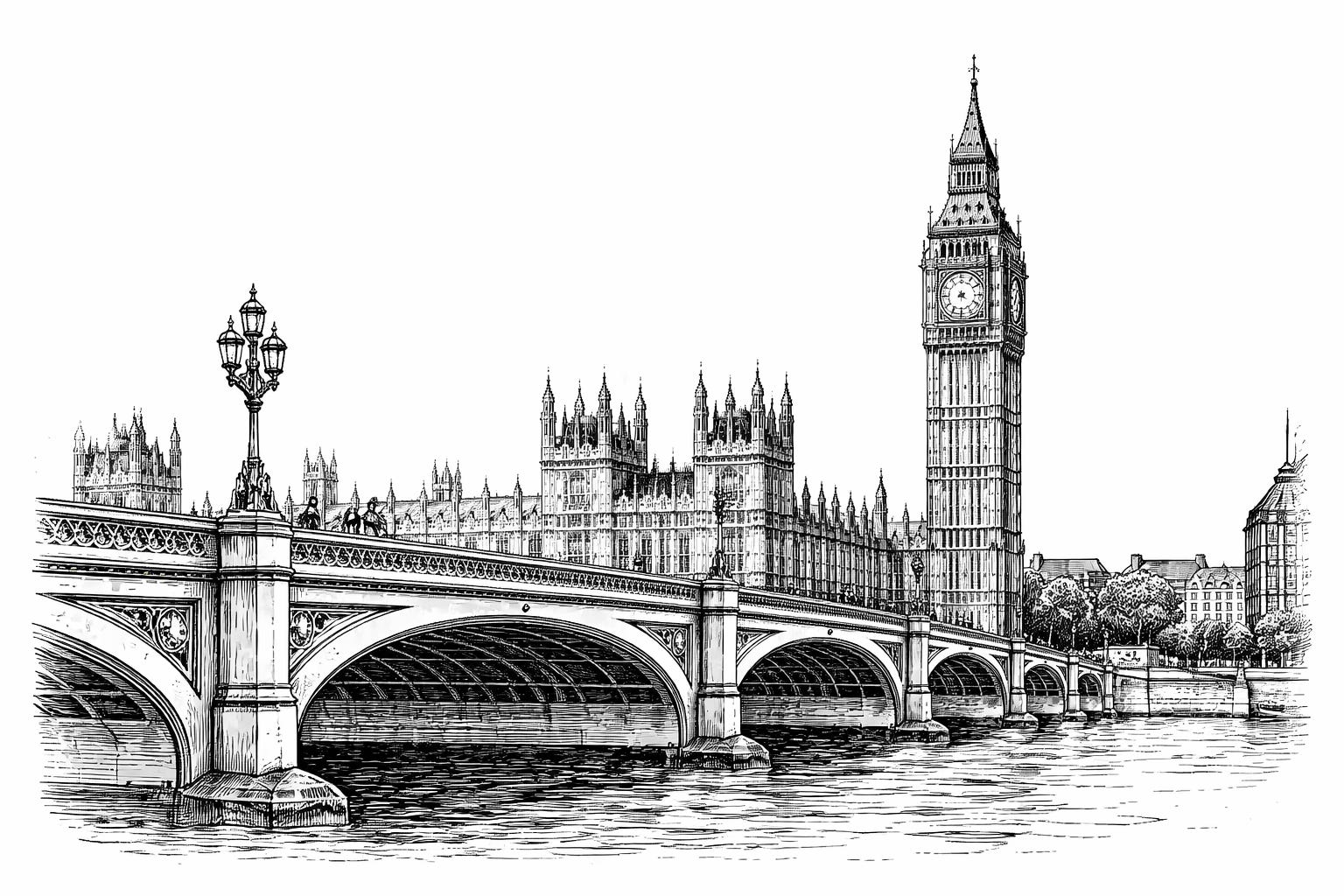
Editor's note: London played host to two global spectacles: Queen Elizabeth II sailed beneath this bridge to mark 60 years on the British throne—and the city welcomed the 2012 Olympic Games. What follows is my futile attempt to witness both. Another Beautiful Disaster.
The Diamond Jubilee
The rain had been bucketing down, but for a few minutes the showers eased. We stood along the banks of the Thames River, waiting for the Queen of England.
June 3, 2012 — the Diamond Jubilee. Sixty years on the throne.
I zipped my coat tighter when I felt rain slide under my collar. It was early summer in England, after all.
The Queen’s royal barge would pass by with hundreds of boats in a long procession. My wife and I had come halfway around the world for this.
We were among an estimated one million people gathered along both banks of the Thames to watch the monarch glide by, complete with a brass band and the ringing of church bells.
We never saw her.
We heard the cheers swelling along the river bank — proof that Her Majesty was somewhere in view. But not for us. Even on tiptoe, my wife and I saw only peoples’ backs, Union Jack flags, and enthusiastic royal watchers crowding shoulder-to-shoulder.
I was truthful during my ad-libbed story for a radio station back home, where I was a freelance reporter. Here’s what the listeners heard:
A light spritz of rain turned into a steady shower. By the time we crossed Westminster Bridge and ducked into the Tube, we were soaked and slogging.
On the train home, I saw it: a billboard with the slogan “Take Courage.” It moved me. There it was — British resolve in two words. Never give up. Don’t let rain dampen your spirits.
Until I learned the truth: it was advertising for a brand of British beer.
Back at our rental flat, we turned on BBC TV.
And there she was. Her flotilla filled the Thames, boats stretching downriver through the heart of London.
Queen Elizabeth — small beneath the ship’s canopy — steady in the rain. She’d been a princess during the World War II bombing of London. A queen since 1952. She was dressed all in white, including her hat. The Queen lifted her gloved hand, waving to her subjects.
Covering her celebration wasn't the only assignment London had in store for me that summer.
The Olympics
That same summer, London was preparing for another spectacle—the 2012 Olympic Games.
The world’s biggest sporting event was coming, with opening ceremonies set for July 27. Before leaving home, I had pitched the radio news director for FM News 101 on the idea of filing preview reports from England.
“What if I cover the run-up to the London Olympics?” I’d asked.
If she’d been British, she might have said, “Brilliant.”
Instead, she simply said, “Let’s do it.” Not a paid assignment, mind you, but a side gig during our travels in England. We were already booked to fly home before the Games began, but we’d be watching them on the telly once we got home.
Some Brits were none too happy about the hassles of big crowds in the capital city.
We took a black cab. As we got out, the cabbie complained that due to the expected Olympic traffic jams he wouldn’t be able to drive within shouting distance of certain hotels. His passengers, he said, would be conscripted into a forced march — towing their luggage.
My Olympics preview would need more than street interviews. I wanted someone official to comment on what the upcoming games would show the world.
I called the Olympic press office and asked for the PR supervisor. I introduced myself as a U.S. radio reporter and made clear I wasn’t credentialed.
She told me they were ‘too busy’ to meet—too busy serving the members of the news media, like me, apparently.
“Are you sure?” I asked.
“Quite,” she replied.
London, it seemed, was open to the world — but not always for me.
Missing the Queen, Finding Fiona
The next afternoon, in East London, the story shifted. We were exploring the artistic Spitalfields neighborhood when a sign for tea and cakes enticed us inside.
We stepped into a townhouse built in 1720 — the kind of place where nearly three centuries of history was refurbished into a posh B&B. Tall sash windows filled the upper rooms with light. The living quarters had all the ‘mod cons’ as Brits call modern conveniences.
Fiona Atkins ran her B&B near streets once haunted by Jack the Ripper, whose unknown identity has long since slipped into the fog of history.
The ancient townhouse had once belonged to Huguenot silk weavers — French Protestant refugees who had fled religious persecution in the early 18th century. The tall windows let in light for the weaving rooms. These weren’t just workshops. They were homes of skilled artisans building new lives.
Fiona had a plummy English accent — the kind that sounds refined. But beneath the warmth was worry.
Hear our conversation that afternoon in Spitalfields:
When I asked about the Olympics, just weeks away, her tone shifted.
“I’ve just heard that a lot of hotel bookings are down,” she told me. “I’m slightly warier than I was in terms of business.”
At that point she had vacancies and some hotels were dropping their room rates.
“I think it was a wonderful thing for London to get the Olympics,” she continued. “Join the party.”
Speculation about a big boom in tourism that summer inspired some homeowners to consider renting tent space in their back gardens. The actual number of visitors was lower, though, not as robust as was hoped.
But Fiona wasn’t selling tent space. She was offering holiday room rentals in her elegant townhouse, with artwork for sale, plus coffee, tea and homemade cakes.
Months later, I sent her the audio file of our conversation. Her emailed reply arrived with British understatement:
“Thank you so much for sending me this. I’m pleased that my confidence was well founded. London was amazing during the Olympics — not so good for business, but an incredible atmosphere and, to everyone’s relief, things worked!”
Her Olympic anxiety was justified—business did suffer. But so was her optimism—London pulled it off.
We never saw Queen Elizabeth II from the riverbank.
We never made it past the Olympic gatekeepers.
But we heard London — and back home, radio listeners heard it too: Fiona and everyday Brits, celebrating their Queen—and the Olympics.
As if adding its own punctuation, we heard—and felt—reverberations from a ceremonial cannon, booming out across London:
Fiona Finis
We had slogged through it all; failing to see her Majesty, getting the cold shoulder from the Olympics HQ, and generally dampened spirits in the rain—until we met dear Fiona.
Makes me want to Take Courage and go have a pint.
**Bonus audio: Recorded prior to the London Olympics—a conversation with Oregon sports journalist John Canzano.
Running time: 5:34